Author: Pankaj Anand, Country Director of Oxfam in Timor-Leste
World Humanitarian Day is observed annually on August 19 to honor humanitarian workers who risk their lives to help people affected by conflicts, disasters, and crises worldwide, and to raise awareness about the challenges faced by vulnerable populations and aid workers.
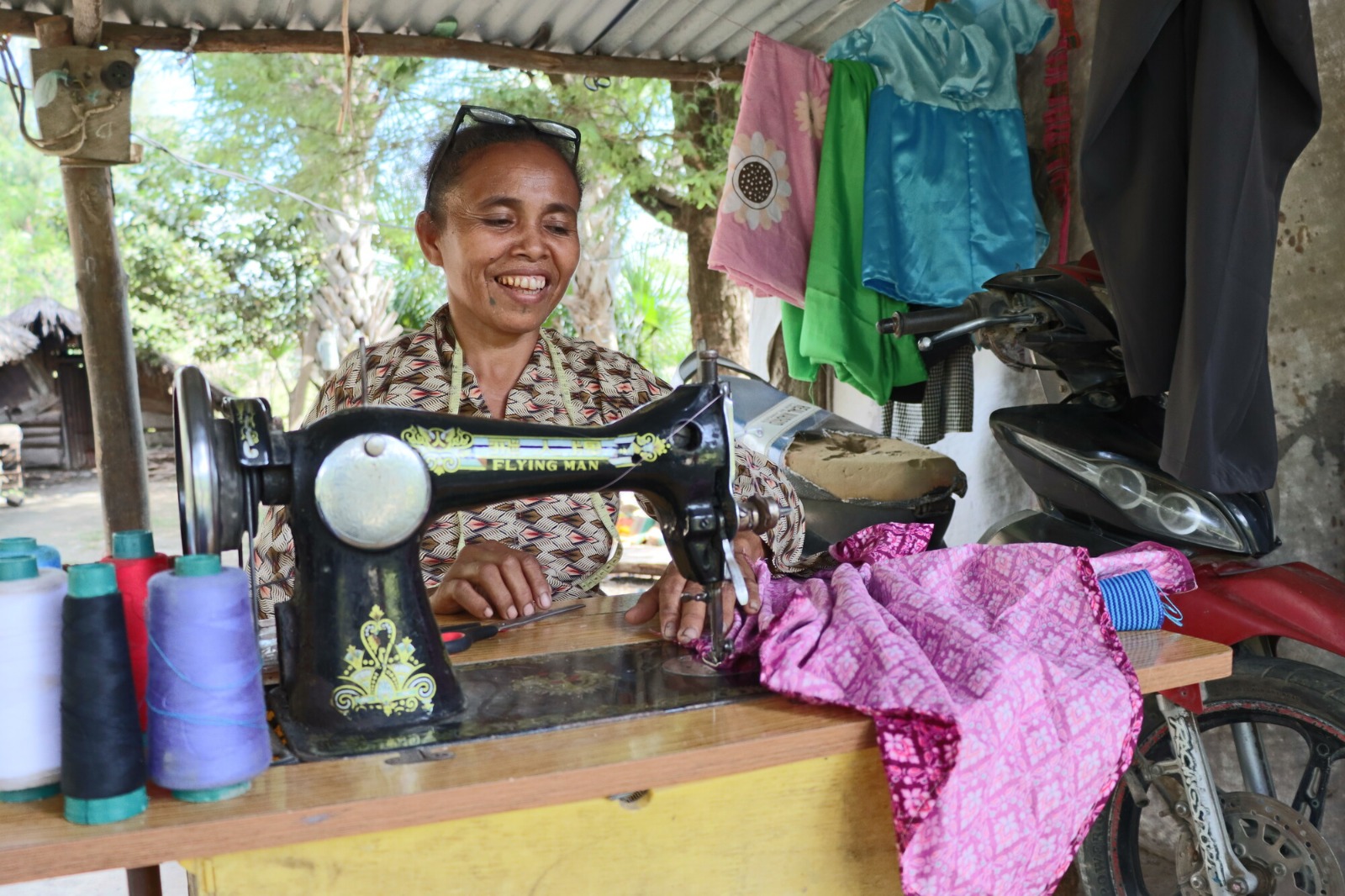
Women as humanitarian actors remain largely invisible within humanitarian action. Their roles are often not formally recognized, with much of what they do being informal, community-based, or unpaid. Their labour and time are viewed as expected or obligatory rather than as essential humanitarian leadership.We know that women, girls, and children have differentiated needs during crises. Women volunteers and women-led local organizations are many a time the first to respond. These organisations are often composed of crisis-affected individuals themselves and created in response to pertinent community needs. They do not follow the model of a traditional NGO. Think of the women running local soup kitchens, organizing volunteer and donation drives, and providing psychological support. This is valuable work but is often overlooked when we think of formal humanitarian action.Our experiences in Timor-Leste consistently demonstrate that these women are often the first on the ground, providing timely, inclusive, and gender-sensitive support to crisis-affected communities. For instance, during surges of natural disasters such as floods and cyclones, women leaders in Suco Disaster Management Committees have played pivotal roles in early warning dissemination, evacuation coordination, and community support. We see a similar picture across various parts of Asia, where women volunteers and women-led local organizations are consistently among the first to respond.We hear a lot about localization, where funders recognize that humanitarian action must be locally led and that communities are not passive beneficiaries but active agents in their own recovery. But we must pause and ask: has this localization truly shifted power, and is any of this power shared with feminist organisations?In practice, what we see is more a handover of responsibility than a true shift in power. For us, localization is not just about who happens to be closer to the communities. Looking at the power dynamics is critical. A humanitarian system cannot be locally led if decision-making, resources, and agenda-setting remain concentrated in international institutions.Women’s Rights Organizations (WROs) are already leading humanitarian responses. They are often the first responders, deeply embedded in communities, and uniquely positioned to reach those most often left behind. In Timor-Leste, organizations like Masine Neo Oe-Cusse (MANEO) in Oecusse exemplify this. MANEO has supported flood response efforts, including aid distribution to women-headed households and persons with disabilities, while prioritizing community-embedded, needs-driven action rather than rigid NGO models. Alongside partners in initiatives like the Disaster READY project, such groups demonstrate how locally rooted WROs deliver rapid, context-specific support that formal systems often overlook.Despite their contributions, feminist WROs remain chronically underfunded, excluded from decision-making, and treated as implementing partners rather than strategic leaders.Picture a humanitarian partnership. Often there is extensive due diligence which many women’s organizations are unable to clear simply because of how they are organized; they are not well-oiled machines built for compliance. They are often created in response to urgent community needs.The organisations that do clear the due diligence become implementing partners and often end up prioritizing compliance over quality of response. This paradox will always remain in a funder-grantee relationship. Without intent, compliance will always trump actual trust, and there will always be unequal power relations between international actors and local feminist organizations.For us, feminist leadership is not simply about women leading. It is about adopting feminist principles: shared power, collective leadership, intersectionality, accountability, solidarity, and care. In Timor-Leste, Oxfam has supported pathways toward more equitable partnerships through collaborative models like the Disaster READY project and women’s economic empowerment initiatives (e.g., HAKBIIT). These emphasize co-creation with local partners, capacity strengthening for WROs, and shifting decision-making closer to communities. They move beyond transactional implementing partnerships toward trust-based collaboration that values local expertise in agenda-setting and resource allocation.We argue that localization without these elements will continue to reproduce existing inequalities instead of transforming the humanitarian system.Donors and international agencies need to introspect and reflect deeply for the system to change. The conversation has moved away from whether local actors can deliver quality responses. There is ample evidence that they can—and will continue to provide support with or without external backing. It is up to donors and international agencies to truly shift power to local actors. Pathways include flexible, multi-year funding to feminist WROs and building equitable, trust-based partnerships.Aid cuts make this introspection even more urgent. International humanitarian assistance contracted sharply in recent years, with a notable drop in 2025 amid global funding contractions that affect vulnerable contexts like Timor-Leste. As resources shrink, whatever little funding remains must prioritize direct, flexible, and long-term investment in local feminist organizations. The Disaster READY project—implemented through a consortium including Oxfam and local partners like MANEO and Ra’es Hadomi Timor Oan (RHTO, the national disabled people’s organization)—stands out. It emphasizes women’s leadership in stewardship roles within the Disaster Ready Country Committee (DRCC) and Suco Disaster Management structures, while championing disability inclusion. These models show what is possible when power is shared more equitably at the local level.There is a need to rethink humanitarian theories of change. Success should no longer be measured only by how much funding reaches local actors, but by who holds power, who sets priorities, and who makes decisions. The future of localization is feminist.Humanitarian reform will only succeed when Women’s Rights Organizations are recognized, resourced, and trusted as leaders in their own right. This World Humanitarian Day, the call is to think through the localization of humanitarian action and ask ourselves how we can make the shift truly feminist—ensuring responses are led by those closest to crises and accountable to the communities they serve.